Overview
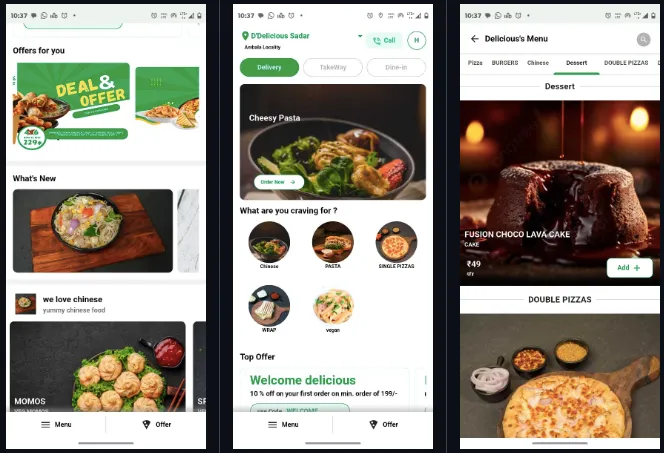
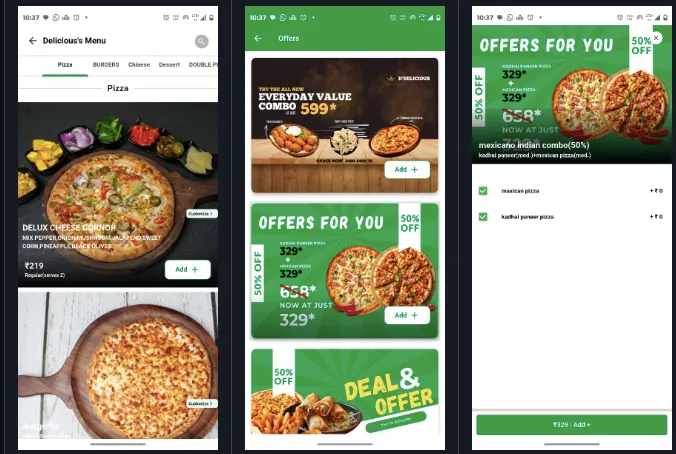
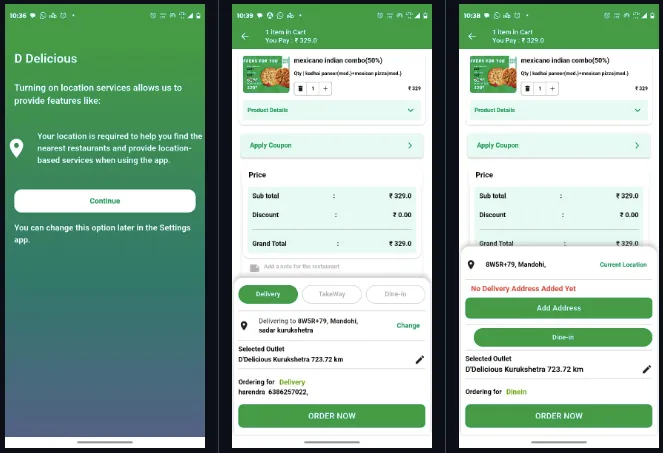
I-Eat gives a restaurant brand its own ordering and delivery apps across its outlets, so orders and customer data stay with the restaurant instead of an aggregator. It runs live for the Apni Angithi restaurant brand; a related build was delivered for D'Delicious, and a multi-vendor edition supports city-wide food marketplaces.
Problem
Restaurant brands lose margin and customer relationships to aggregators, but building their own customer app, rider app and back office is a large, multi-platform job.
My role
Architecture and development of the Flutter apps and the Node.js backend.
Engineering approach
One backend serves three Flutter apps. Order state changes are pushed in real time over Socket.IO, Redis backs the hot paths, Firebase handles push notifications, and Razorpay handles online payments.
Technical architecture
- Customer app (Flutter)
- Rider app (Flutter)
- Restaurant admin app
- Node.js / Express
- Socket.IO order events
- MySQL
- Redis
- Firebase notifications
- Razorpay payments
- Maps
Challenges & solutions
Keeping three apps in sync
ChallengeCustomer, kitchen and rider must see the same order state instantly.
SolutionServer-pushed order events over Socket.IO instead of polling, with push notifications for apps in the background.
Many outlets, one brand
ChallengeMenus, stock and riders differ per outlet.
SolutionA multi-outlet backend with branch-level menus, staff and order routing.
Features
- Menu search, item customisation, cart
- Checkout and live order tracking on a map
- Offers, coupons, wallet and refer & earn
- Rider app with navigation and delivery reports
- Restaurant admin: menu, outlets, offers, riders, reports
Screenshots